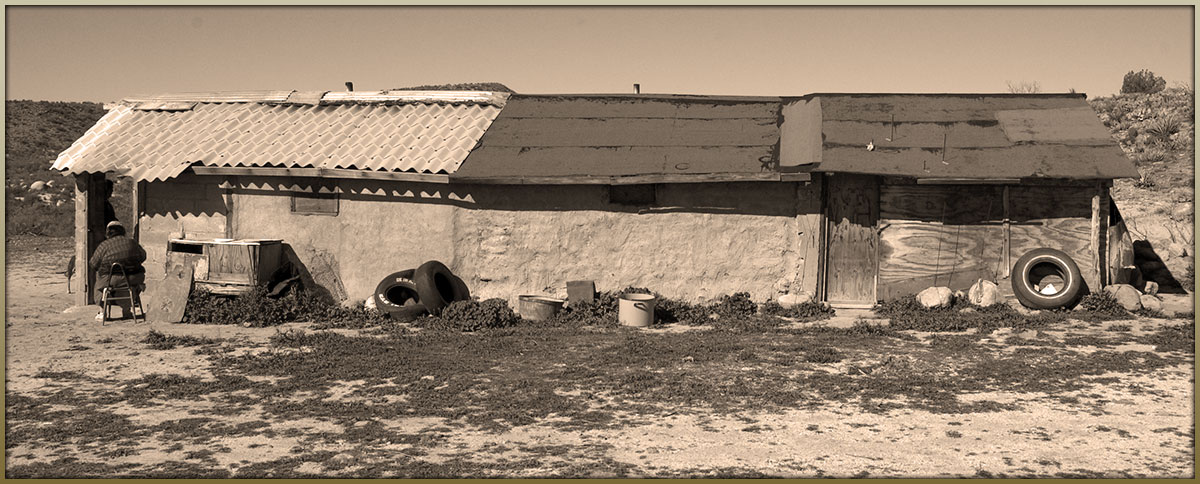
I sepia toned Manuela's ranch house (2005) for aesthetics to illustrate what appears a mismatch of time and place in the 21st century. Hover on/off or Click on photo to rollover original color 2005 photograph.
SANTA CATARINA KOATL PAI-PAI INDIANS INDIGENOUS COMMUNITY
|
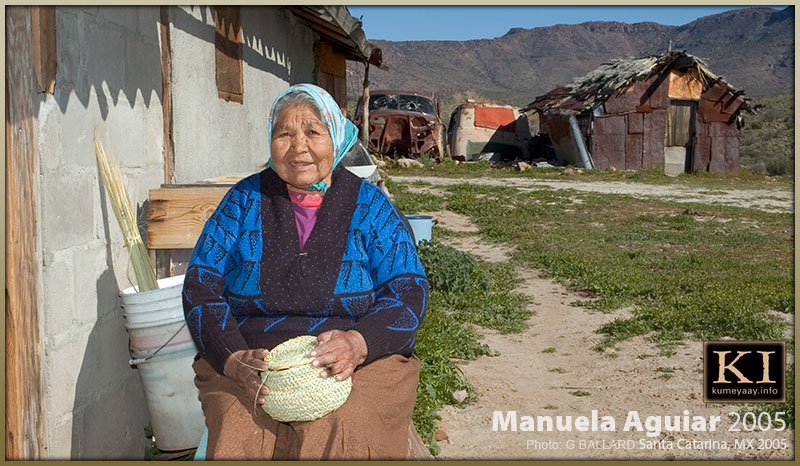
Manuela's ranch was the first home I visited in the Santa Catarina ejido mountain area, and this was the first time I laid eyes Manuela. I took the above photo as our 1990 Chevy Suburban 150 pulled into her remote mountain top rancheria. I decided to lead this online photo documentary with the above image of Manuela Aguiar, Ko'al Ko'atl Kumiai Paipai, weaving a basket outside the front door of her Santa Catarina mountain ranch home.
Manuela Aguiar, pictured February 2, 2005.
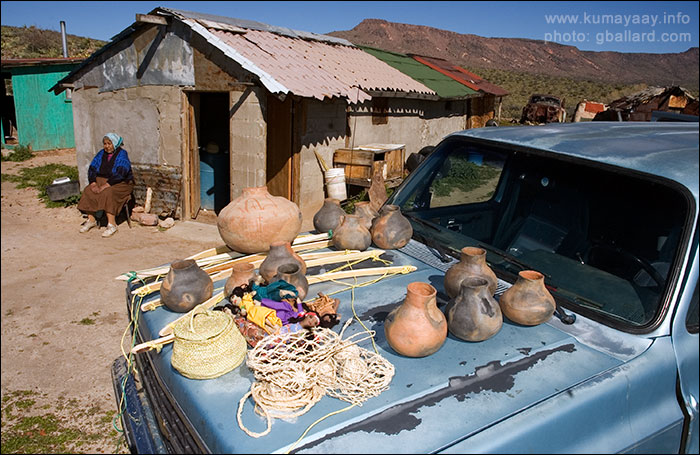
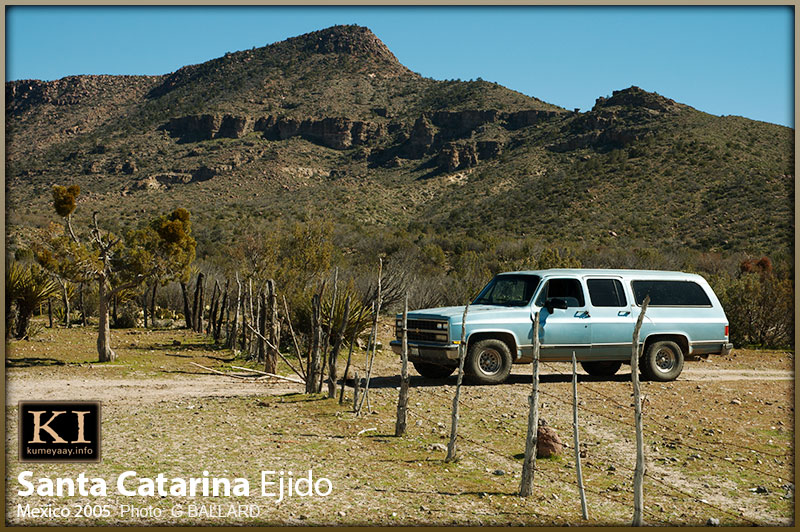
JB Kingery's and Eva Salazar's world: I made all of my trips to the Baja ejidos with JB Kingery (Baja guide and importer), most of them in this blue Chevy Suburban. He was married to Eva Salazar at the time and they operated Shumup Ko Hup with Jane Dumas in Old Town State Historic Park. JB didn't like his name or photo to be in my published photos or writings, though he loved to be in family pictures. It was part of our conversation -- but now that he's passed (2024) -- I can finally give the man the credit he deserves for his substantial guide and translating services. My Baja documentaries are JB's world. Manuela lives on the top of a mountain with her sister, Teresa, and brother, Selso Aguiar, in this small Indian village community. The sisters, the Aguiar family, are well-known for their pottery, basketweaving, doll making, agave fiber net bags, medicinal plants, and traditional knowledge ... Manuela Aguiar has Contributed her old Aguiar historic family picture collection for restoration and presentation on KUMEYAAY.INFO.
THIRD WORLD LIVING STANDARDS: By the United State's living standards in 2004, the Kumeyaay Pai Pai people of Santa Catarina are poverty stricken, closed out of most modern-world conveniences. I cannot recall any of the rural Santa Catarina homes I visited (2004-2005) having wired electricity or running water -- a trip to the restroom still meant either looking for a bush or an outhouse.
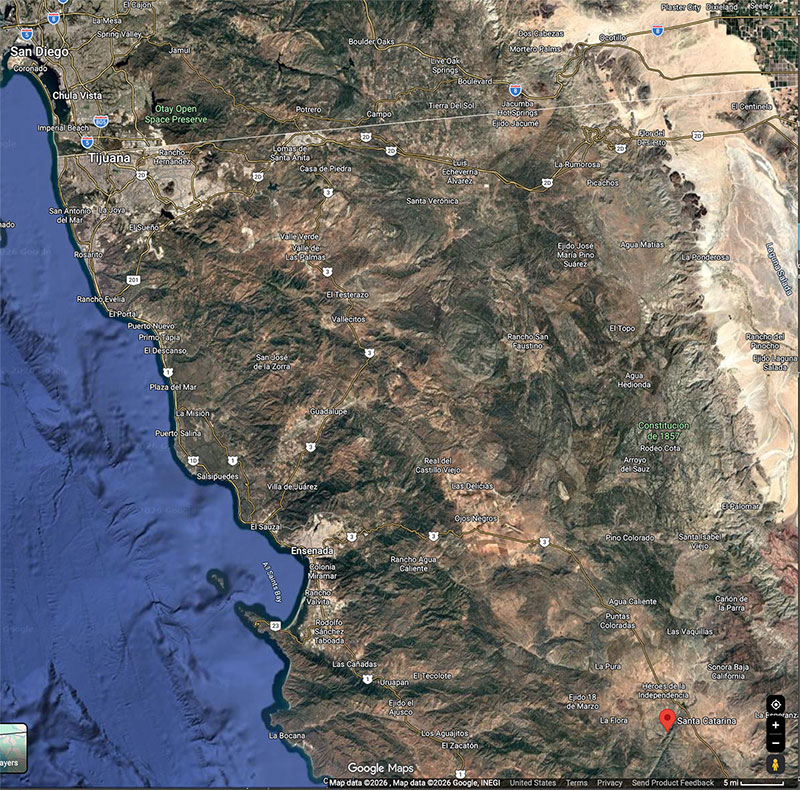
The roads from the main highway into Santa Catarina are eroded unpaved dirt that wind for miles off the main highway into the back country and branch off into remote mountainous scrub brush high desert countryside. The Baja 1000 Race route runs right through Santa Catarina. SANTA CATARINA or SANTA CATALINA, Mexico?
*Juan Meza Cuero (Kumiai Bird Song Leader, born in 1935), in a 2001 uabc.mx interview, said: "Cochimí people and some Paipai who came from Santa Catalina... I don't know whether my grandmother was Cochimí or Kumiai. It was the Santa Catalina area....". When the Webmaster visited Santa Catarina in 2004, 2005, 2006, 2009 it appeared there were a lot of Paipai natives living in the ejido. I would look more into Santa Catalina vs, Santa Catarina in Mexico if curious. Snippets of my initial on-line research:
|

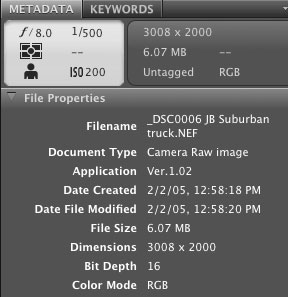 The camera data (for this image) calls out the time, date, exposure and digital format. From the looks of the pixel dimensions (3008x2000) it was shot on my original Nikon D-70.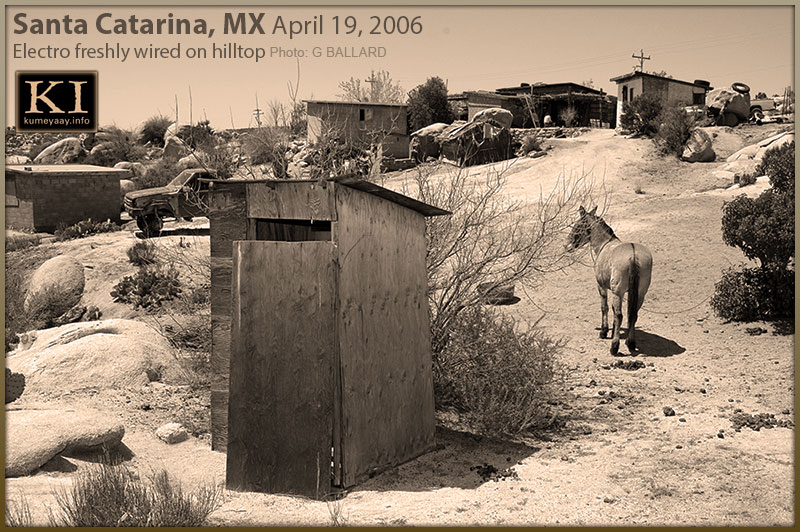
NATIVE AMERICAN Indigenous artists fine art cultural posters for sale the webmaster produced a series of 48-inch fine art posters of his photojournalistic documentary series on the California tribal peoples of North America.
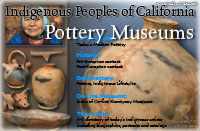
PAI PAI KUMEYAAY POTTERY Museum features the modern Kumeyaay Paipai pottery art of the Yuman Indians of Southern California, Arizona, Mexico. Our extensive photography documentation of Native American pottery artist includes online picture catalogs of their traditional and contemporary clay pottery, including environmental portraits and biographies of the pottery artists. KUMEYAAY.INFO is currently building large, captioned photographic collections of rare and old antique ancient pottery artifacts for its on-line Indigenous Peoples of California Pottery Museum, los indios indígenas de las fotos documentales de la forma de vida del photojournalism de México representan películas.
To buy purchase authentic Santa Catarina Pai Pai Kumeyaay Indian pottery, their traditional Indian arts and crafts, please visit the Shumup Ko Hup "Dream Come True" Indian store in Old Town State Historic Park, San Diego, California.
Terms of Use • Privacy Statement • Site Map • Kumeyaay Indians Research