SITE MENU includes full index of legacy directories
STUFF TOO INCREDIBLE...
Original CALIE education featured a SPACE PORTAL for kids -- a student's guide to star gazers, astronomy, games....
This Artemis 2 video was the last item posted on the legacy CALIE site -- the CALIE website was deleted days after the Artimis2 moon mission completed with a splashdown off the coast of San Diego:
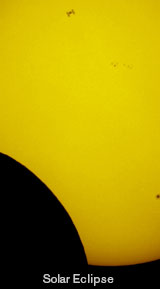
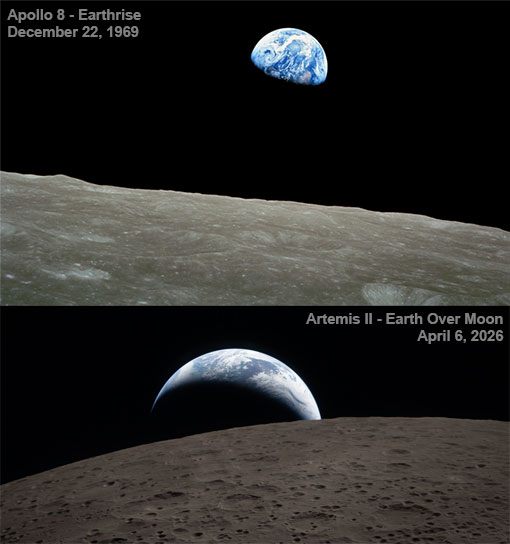
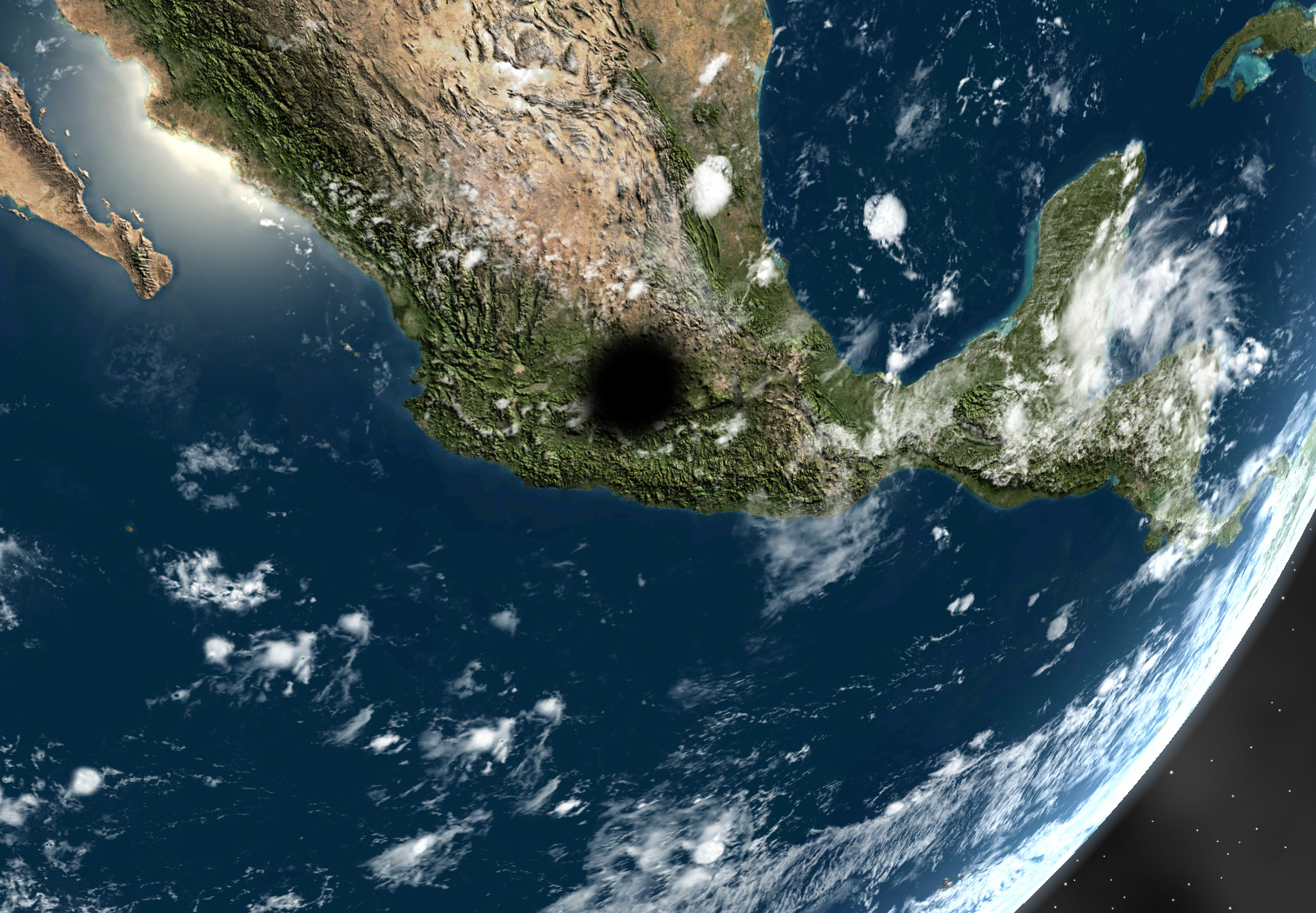
NASA's Artemis II crew captured this amazing imagery of the Earth moon and a solar eclipse during their lunar flyby on April 6, 2026.
Credit: NASA | edited by Space.com's [Steve Spaleta]
Photo/caption: WIKIPEDIA
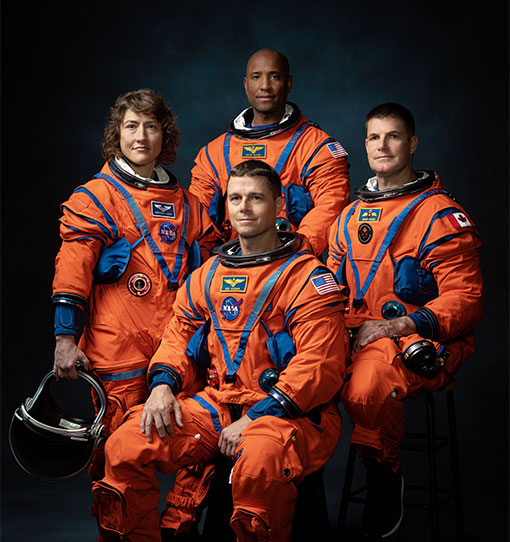
Official crew portrait for Artemis II, clockwise from left: NASA Astronauts Christina Koch, Victor Glover, Canadian Space Agency Astronaut Jeremy Hansen, NASA Astronaut Reid Wiseman. Studio group photo by Josh Valcarcel
NASA's mission is to pioneer the future in space exploration, scientific discovery and aeronautics research.
To do that, thousands of people have been working around the world -- and off of it -- for almost 50 years, trying to answer some basic questions:
What's out there in space?
How do we get there?
What will we find?
What can we learn there, or learn just by trying to get there, that will make life better here on Earth?
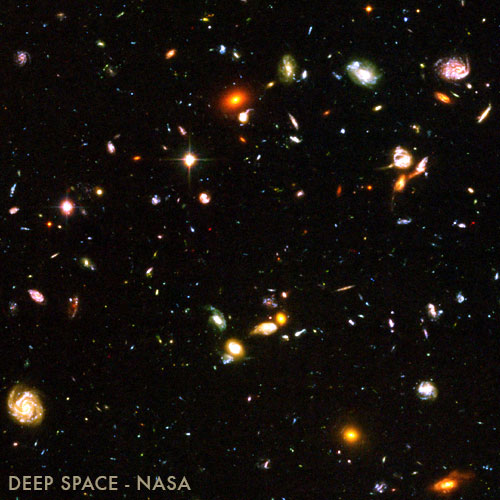
Our ancestors could not have imagined NASA's Deep Space photo in their wildest dreams... I have to wonder: What's next?
ICONIC space images:
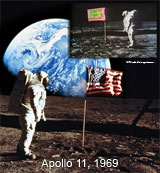
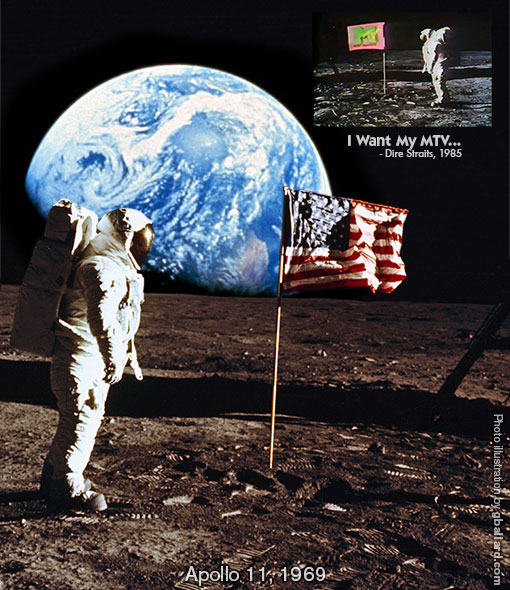
Apollo 11 astronaut Buzz Aldrin (the second human on the Moon) photographed standing beside the U.S. American flag and Lunar Module Eagle space craft. The webmaster Photoshopped a picture of Earth and a MTV graphic in the background to make this a memorable 20th century iconic image. Official NASA photo by Mission Commander Neil Armstrong (the first human to set foot on the Moon, during this mission, 1969).
A 19th Century American Indian Perspective on Creation:
CINON DURO (Hokoyel Mutaweer) c.1816-1906, Mesa Grande Ipai Kuseyaay:
In the beginning, there was no form or shape.
The Sky-Power Father and Earth Mother, Sinyohauch, gave issue to two sons: Tuchaipa, the first born, and Yokomatis, the younger.
The brothers created man, the sun, the moon, and the stars.
First, they sent the sky up by blowing tobacco into the air....
The James Webb Space Telescope studies every phase in the history of our Universe, ranging from the first luminous glows after the Big Bang, to the formation of solar systems capable of supporting life on planets like Earth, to the evolution of our own Solar System.
Webb launched on Dec. 25th 2021. It does not orbit around the Earth like the Hubble Space Telescope, it orbits the Sun 1.5 million kilometers (1 million miles) away from the Earth at what is called the second Lagrange point or L2.
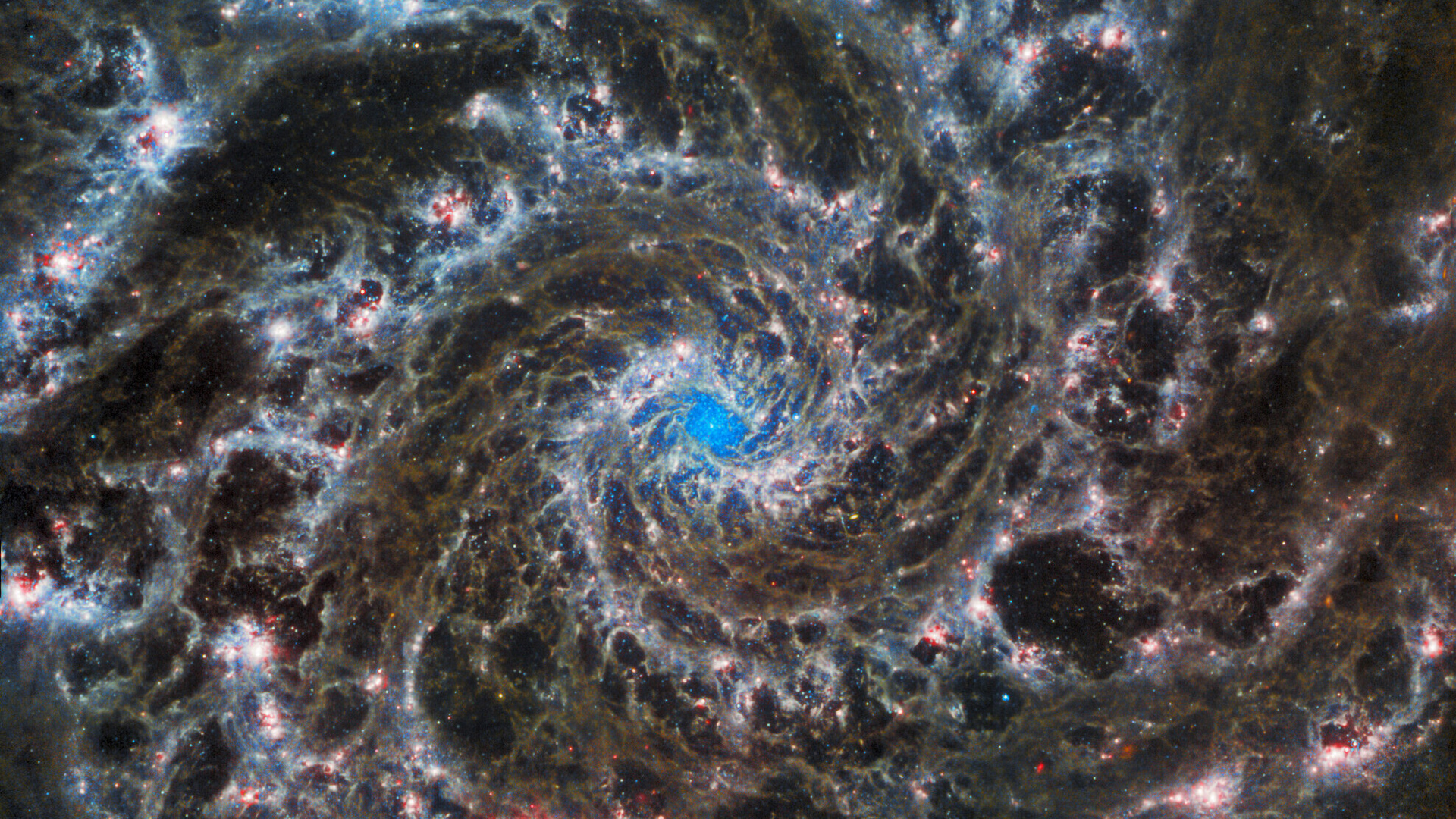
The Jamess Webb Space Telescope's view of the spectacular Phantom Galaxy (Image credit: ESA/Webb, NASA, CSA, J. Lee and the PHANGS-JWST Team) MORE IMAGES from space.com.
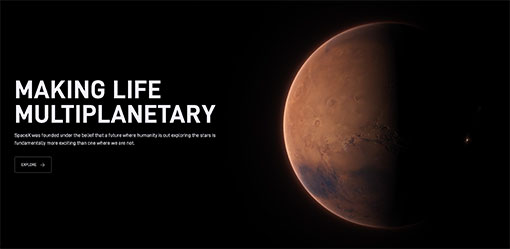
Elon Musk founded SpaceX in 2002 under the belief that a future where humanity is out exploring the stars is fundamentally more exciting than one where we are not.
Elon Reeve Musk (born June 28, 1971) is a businessman and public official known for his leadership of Tesla, SpaceX, X (formerly Twitter) and xAI. Mr. Musk has been the wealthiest person in the world since 2025. Forbes estimated his net worth to be US$788 billion in May 2026. (WIKIPEDIA)
The Palomar Observatory is located in north San Diego County, California. It is a world-class center of astronomical research that is owned and operated by the California Institute of Technology. The observatory is home to five telescopes that are nightly used for a wide variety of astronomical research programs. The research is conducted by Caltech's faculty, post-doctoral fellows and students, and by researchers at Caltech's collaborating institutions.
The Palomar Observatory is open to the public (see their Web site for more information and beautiful photography gallery of star pictures....
(no longer updating the broken links)
CALTEC.EDU maintains a space portal to the top observatories in the United States, including:
Caltech's Palomar Observatory, in San Diego County.
Keck Observatory is perched atop the dormant volcano, Mauna Kea, on the island of Hawai.
The Owens Valley Radio Observatory is located some five hours north of Pasadena, near the Sierra Nevada range.
The Combined Array for Research in Millimeter-wave Astronomy (CARMA) is the merger of two university-based millimeter arrays -- the Owens Valley Radio Observatory (OVRO) millimeter array and the Berkeley-Illinois-Maryland Association (BIMA) millmeter array.
The Chajnantor Observatory, is located at an altitude of 5080 m in the Chilean Andes.
The Caltech Submillimeter Observatory is a 10-meter dish atop Mauna Kea in Hawaii.
The Thirty Meter Telescope is a project currently underway by Caltech, the University of California, and the Association of Canadian Universities for Research in Astronomy (ACURA).
The Robinson/Downs Rooftop Observatories.
The Big Bear Solar Observatory is a world center for observations of the Sun. Since July 1997, the facility has been managed by the New Jersey Institute of Technology for a university consortium which includes Caltech.
The Challenger Center's vision is to create a scientifically literate population that can thrive in a world increasingly driven by information and technology. Our vision for the future is a global community where students command their own destinies by developing skills in decision making, teamwork, problem solving, and communication. This vision is based on a realistic assessment of the skills needed for success in the 21st century...
How many stars are there in the sky? How many stories about the stars are there? There are many Tribal stories that explain and/or include the stars. We will look to four tribal stories: from the West, East, South and North.....
+++++
Who produced this incredible space education resource for American Indian tribal students?
Ernie C. Salgado Jr. Tribal: Luiseño
Reservation: Soboba Indian Reservation
EDITOR IN CHIEF:
www.americanindianreporter.com | aireporter.org
www.theindianreporter.com
www.californiaindianeducation.org | CALIE.org
www.ahmium.com
www.apapas.com
CONTACT
RESUME/BIOGRAPHY
PUBLISHED ARTICLES









 In the beginning, there was no form or shape.



 Elon Reeve Musk (born June 28, 1971) is a businessman and public official known for
















 HUBBLESITE "Out of the ordinary...out of this world."
 THE CHALLENGER CENTER